
The long tide of Hampton Roads
Water remembers
Helen Phillips Pitts’ family has lived in Hampton Roads for generations, their roots sunk deep into the tidewater soil. Her grandfather, John Mallory Phillips I, was one of Hampton’s most successful oystermen, with seven boats, his own oyster beds, and even a hardware store.
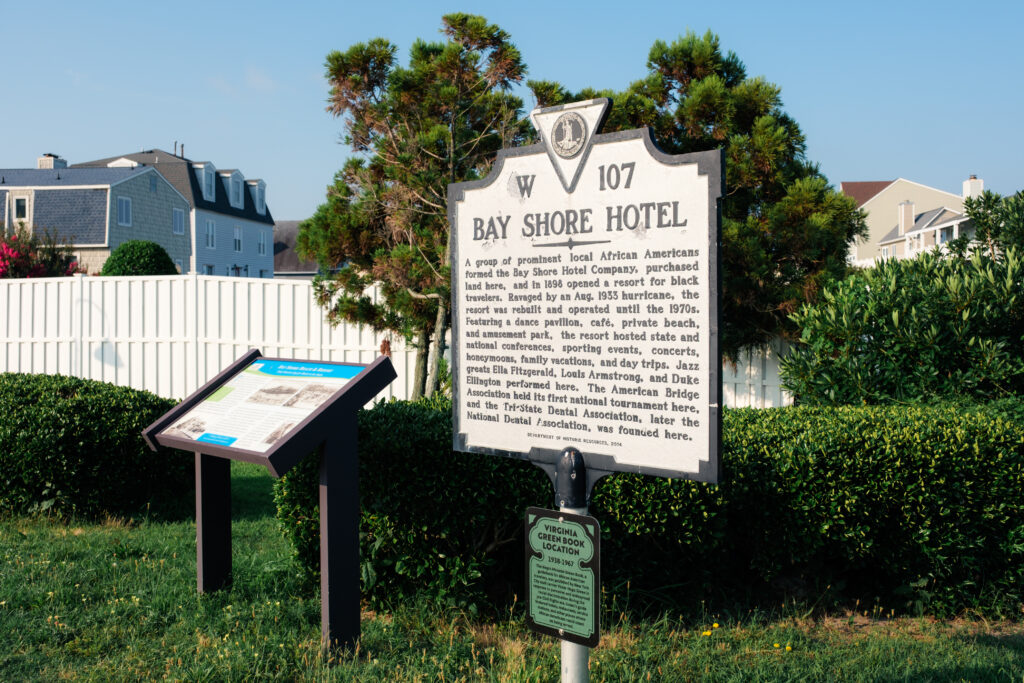
By 1889 he opened the Building & Loan Association, one of the very few banks for Black people in Hampton Roads. And by 1898 Phillips partnered with other Black graduates from the Hampton Normal and Agricultural Institute to purchase a plot of land on the same site as what once was the largest plantation in the area. There they opened the Bay Shore Hotel, a destination resort for Black people that had extensive draw.
Water has been the family’s sustenance. It’s how they lived, worked, and rose. But now, it is also what threatens to take everything away.
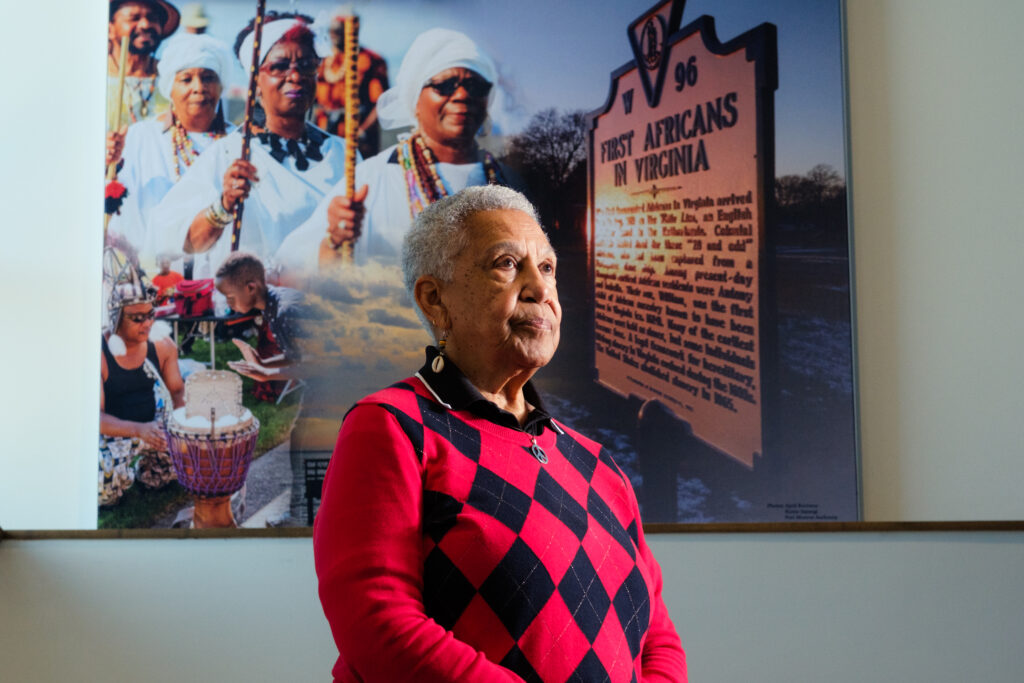
Pitts remembers the floods of Hurricane Isabel in 2003. “All of downtown Hampton—not just people that were on the creek, but all the way around—people couldn’t even get out of there if they didn’t pay attention,” she said of the flooding. “In 1954, it only came up to my house, three houses away from the creek. Now, the whole of downtown Hampton floods. [Because of the impacts of] the climate—it’s crazy now.”
From plantations to port cities
The Hampton Roads area of Virginia remains home to much of Virginia’s Black population. Hampton itself is 49 percent Black. The area is also one of the most impacted by climate change, accelerating sea level rise and sinking land, leading to more frequent and severe flooding, including “sunny-day” flooding, not only on the coasts but also further inland.
“In 1954, it only came up to my house, three houses away from the creek. Now, the whole of downtown Hampton floods.”
Helen Phillips Pitts
Lifelong Hampton Roads resident
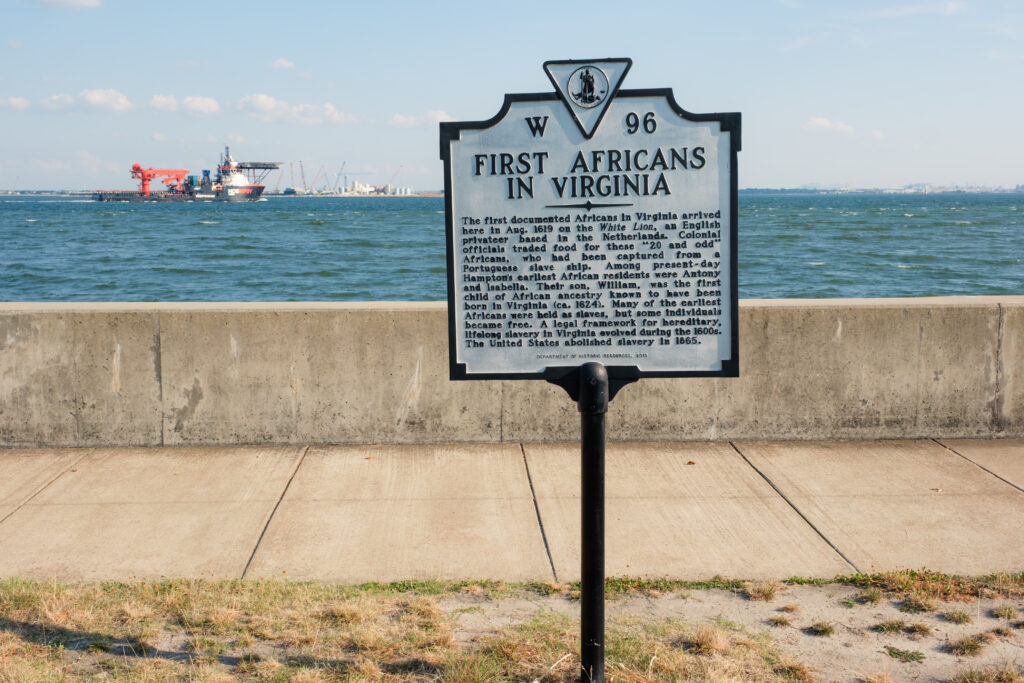
It was here, in 1619, that the first documented Africans arrived in English North America, at Old Point Comfort—an entry point to enslavement that would define the region and the country, for hundreds of years.
Cassandra Newby-Alexander, professor of history at Norfolk State University, said Hampton Roads wasn’t like the big tobacco plantations farther inland. “The waterways, more than anything else, defined the economy,” she said.
Shipbuilding, fishing, trade. Enslaved people weren’t just laboring in fields; they became skilled watermen. They learned to navigate, to build and repair ships, to harvest oysters, and those skills became their form of power.
That knowledge flowed straight into freedom. Thousands of enslaved Black people escaped to the Union-held Fort Monroe during the Civil War, where they were declared “contraband of war.” As the war ended, a couple of miles away, they built a thriving community in Hampton’s ruins, laying the foundations for Hampton Normal and Agricultural Institute—now Hampton University.
And Hampton was not alone—strong Black neighborhoods emerged throughout Norfolk, Portsmouth, Newport News, Chesapeake, Suffolk, and Virginia Beach, or what is commonly known as Hampton Roads. Yet even as those communities flourished, the same power structures that once enforced bondage began rewriting the rules of land and ownership.
“Because of who was controlling the municipalities, you saw planning commissions and city councils making laws that harmed Black communities,” said Newby-Alexander. “Virginia Beach, for example, had dozens of Black communities—30, 50 maybe. And over the years, the city used racial policies to erase them.”
In the early decades of the 20th century, Black landowners who wanted to build or expand homes were told they’d have to pay for their own water and sewer lines—something white landowners never faced. As soon as those Black families sold their property, she said, the city would immediately bring in the infrastructure—on the city’s dime.
And the pattern hasn’t stopped. In 2022, Hampton City Council voted to approve a $93 million industrial site on the land that was once the Virginia School for the Deaf, Blind, and Multi-Disabled. The school opened in 1909 for Black students and is next to a historically Black neighborhood. “People brought evidence of the pollution, the harm, but the city did it anyway,” said Newby-Alexander.
The weight of the water
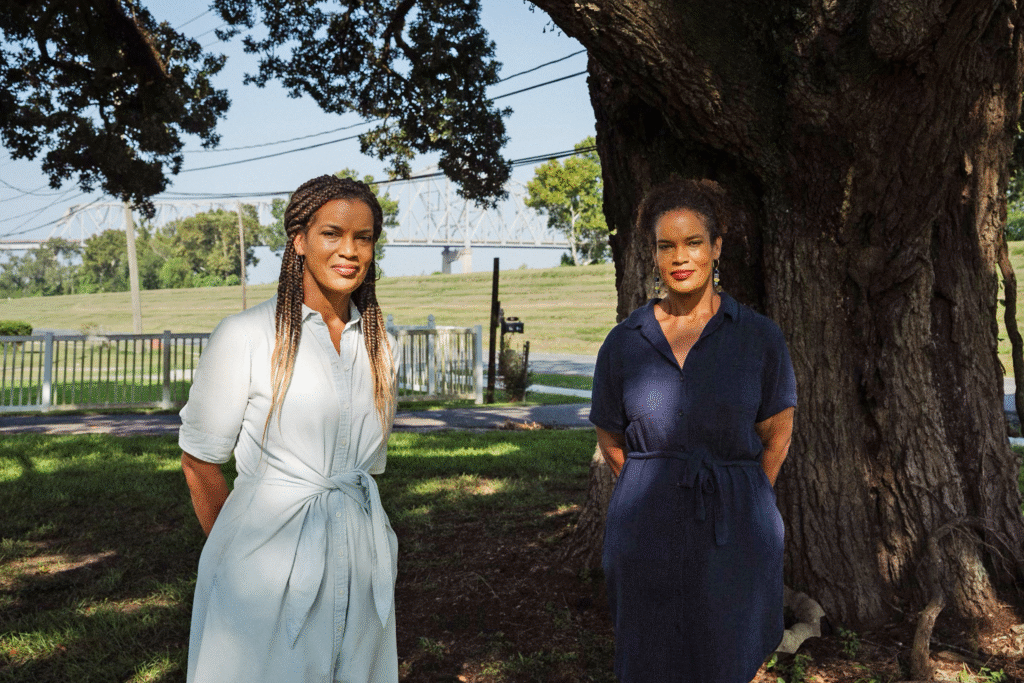
About 12 miles from Hampton, across the Elizabeth River, Kim Sudderth has spent years trying to make the government see what’s coming for Norfolk’s historically Black neighborhood of Berkley.
“I live on the south side, which is probably the wrong side of the bridge,” said Sudderth, who chairs Norfolk’s Planning Commission. “Sometimes folks in the city forget we’re even here.”
The streets in Norfolk consistently flood, and when the U.S. Army Corps of Engineers announced a multibillion-dollar flood protection project, Sudderth hoped her community might finally get some relief. But the 2019 feasibility study left Berkley out.
“They told us that to address the needs of our neighborhood, it would cost more than the property it would protect,” she said. “Eighty years ago, this neighborhood was redlined; there were very limited places where we could live, and our property values were deliberately stunted. Now they’re using those same low values against us. That’s the very definition of environmental injustice.”
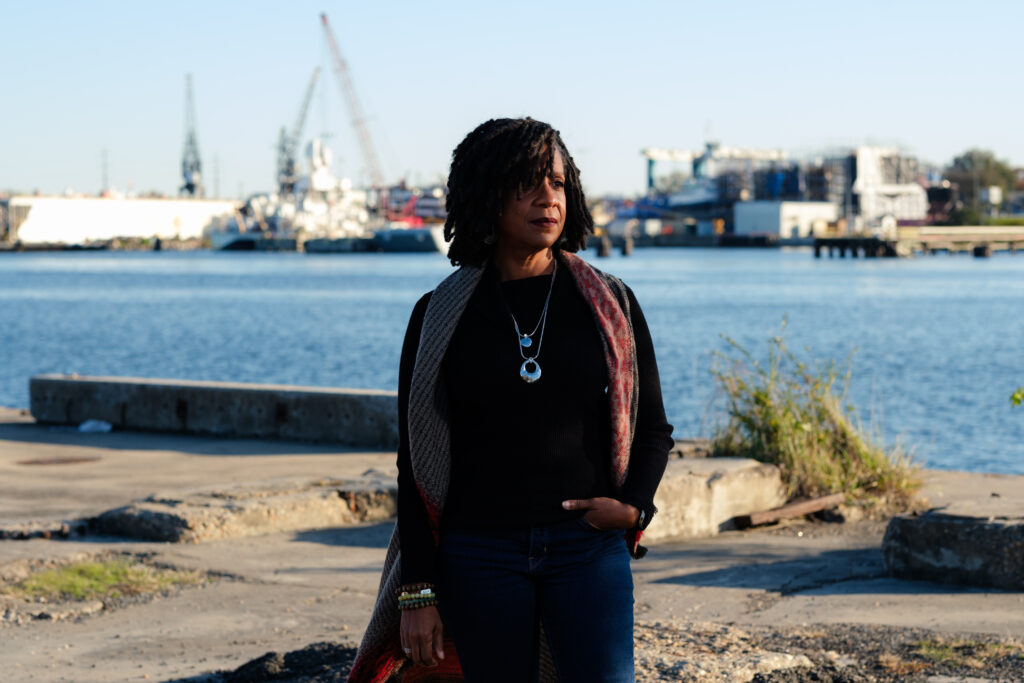
So Sudderth and her neighbors organized—meetings, petitions, coalitions. “Doing nothing wasn’t an option,” she said. “The worst that could happen was we’d stay unprotected. The best was that we’d finally be seen.”
Kim reflects on a conversation with a Norfolk resident about how climate change is impacting them:
After months of pressure, the Army Corps agreed to conduct another feasibility study for Berkley. “Even if everything goes right,” Sudderth says, “it could be 10 years before the wall is built.” In July, construction began on the first phase of the new wall, which is protecting the land around the city’s 12,000-seat baseball stadium.
The past beneath our feet
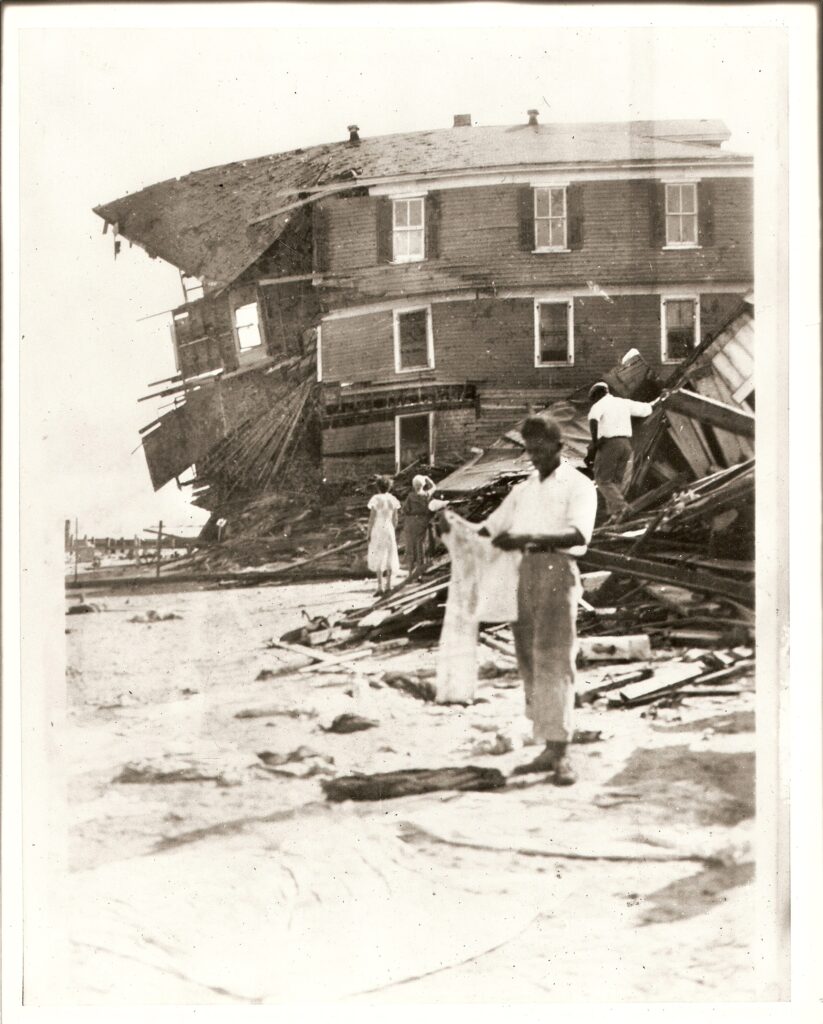
For decades, the Bay Shore Hotel thrived as one of the South’s premier Black-owned vacation destinations—a stretch of sand, a hotel, dance halls—drawing world-famous musicians, church groups, and families from across the East Coast.
For many years, it flourished, but hit by storms and moves to desegregate all public and most private spaces in Virginia, the hotel and its surrounding industries began to wane.
In August 1933, a hurricane destroyed much of the hotel when 18 people were killed and the water level rose a record 9.8 feet. In 1954, Hurricane Hazel recorded 130 mph winds in Hampton. And by 1974, after taking out loans to make repairs and upgrades, the hotel was foreclosed on by the Small Business Administration, which has a long history of race-based discriminatory lending practices.
The land that was home to the hotel and the Black beach was once the Buckroe plantation, the largest in all of Hampton, where wheat and corn served as the largest cash crops. Beth Austin is a historian with the Hampton History Museum who has spent years studying the rise and erasure of the city’s Black landmarks.
“The reason we know more about Buckroe is because there were two men who escaped from Buckroe who are in the Underground Railroad records,” Austin said. “One ended up in New England and sent for his family to join him later on. His eldest son ended up being the first Black man to earn the Congressional Medal of Honor during the Civil War.”
Building the future
If the tide of history in Hampton Roads has used power to push communities apart, today’s organizers are using it to move people together and build movements. That’s where Sudderth devotes much of her energy these days: not just in opposing harmful projects, but in building the capacity to stand with others and act as a collective.
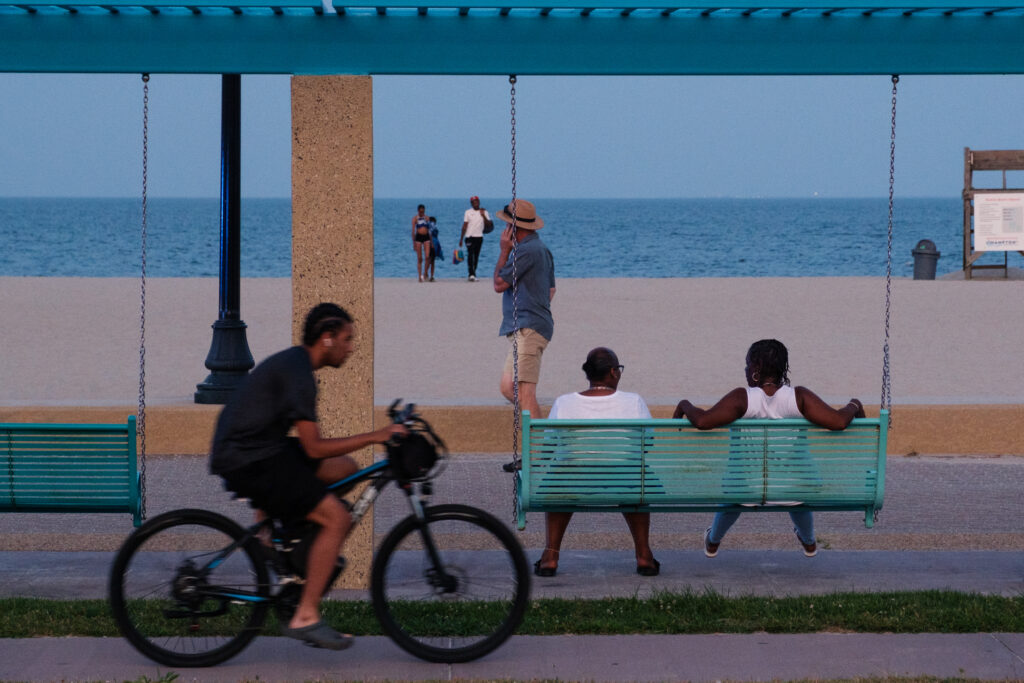
“When I think about the future of Norfolk in particular, and Hampton Roads in general, I’m hopeful,” said Sudderth. “In the future, we’re going to be done isolating ourselves and done with the whole idea of rugged individualism. We’ll lean more into our own mutuality—that we take care of each other first, as opposed to me first.”
For 150 years, the Berkley neighborhood where Sudderth lives has been home to the Colonna’s Shipyard, which recently announced plans to expand—a move that would bring more dust, noise, and light pollution into the community. “They shine their lights all night long,” said Sudderth, “It’s like dusk at midnight. It’s true they’ve been here 150 years, but these last 15, they’ve been creeping closer and closer.”
Sudderth’s father, John Willie Graham, was a ship welder in the Navy. “He’d come home smelling like metal and salt,” she recalled. “He smelled like the fiercest Navy the world has ever seen.” Since his passing, she’s made plans to start a scholarship in his name to teach young people the trade of welding. “I have no problem with shipbuilding,” she says. “I have a problem when a company is set to make billions, and the city is set to make millions of dollars of tax revenue. And all of that is on the backs of previously marginalized communities. And we will see none of the benefits.”
Water as memory, water as warning
The fight for environmental justice today rises on the shoulders of generations of self-determination struggles.
The people of Hampton Roads are positioning themselves so that memory and organizing can be a ballast against the next storm, which will inevitably come; so that communities long treated as buffers can become architects of their own protection; and so that care, practiced in common, can hold.
The same waterways that carried enslaved people now carry the pollution of centuries, and the communities that have borne the weight the longest are still the ones paying the price.
Yet memory and the future of possibility persist—in stories, in the land, in the names of those who refuse to forget.