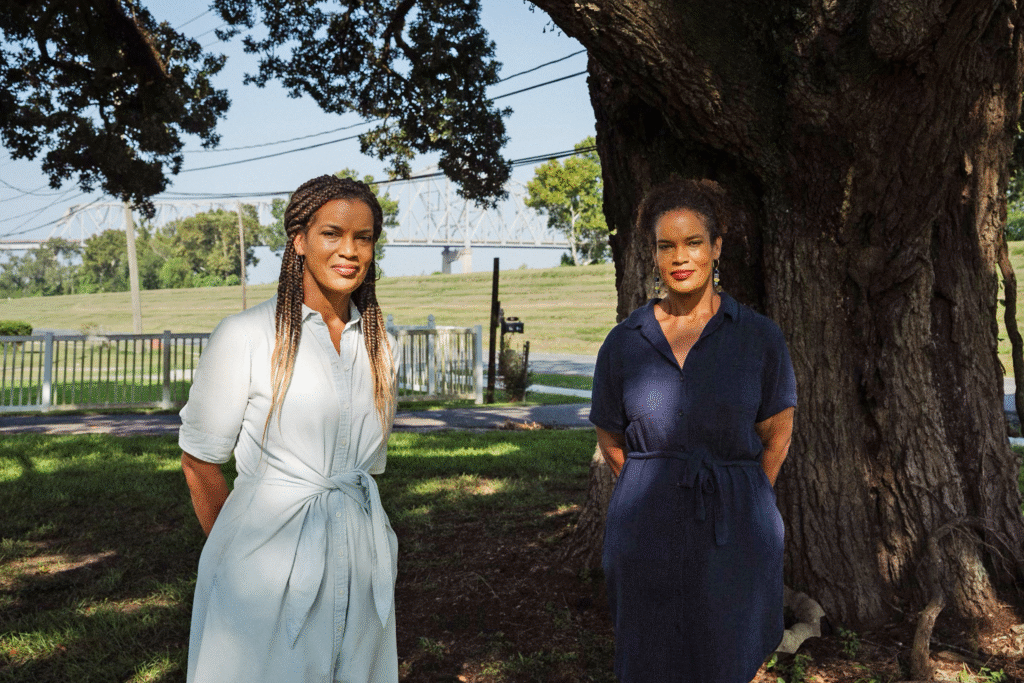

From Stagville to Hayti
Durham residents advocate for Black land retention and community-informed development
Durham, North Carolina, was once home to the Hayti District, a busy “Black Wall Street,” or economic hub for its Black community. Hayti was founded following the Civil War by formerly enslaved Black people from nearby plantations, including one of the largest plantations in the state, Stagville. The economic and cultural hub grew into a haven for Black people in North Carolina and along the East Coast.
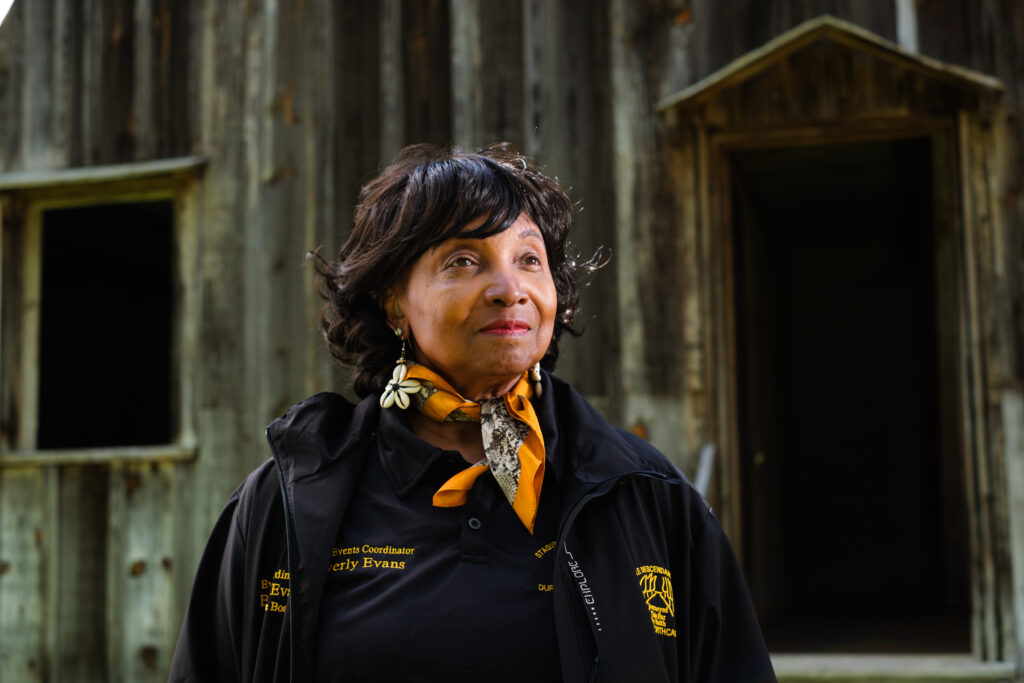
Beverly Evans fondly remembers growing up just south of Hayti and visiting her grandparents and other relatives, as well as her church, White Rock Baptist Church.
Her childhood was full of bike rides through woods and “undeveloped areas” searching for salamanders and frogs, picking blackberries and pomegranates that grew wild.
“I had that freedom as a child to explore nature and be interested in nature because it was all around me,” Evans said.
Today, Evans is proud to call herself an environmentalist and an activist. She is a member of the executive board of the Stagville Descendants Council, an organization committed to preserving the Stagville Plantation historic site and telling the stories of all its former inhabitants.
However, the world Evans grew up in no longer exists, and driving around what was previously the Hayti District, it’s easy to see why. It’s hard to get around without a car, and harder for children to safely bike and walk as she once did. Traffic into and out of the city covers the predominantly Black community with tailpipe pollution. Major highways cut neighbors off from food, economic resources, and each other.
It wasn’t always this way. But one massive land-use decision changed all of that: the development of the Durham Freeway and NC 147 (the northern half of the freeway).
The people of Hayti
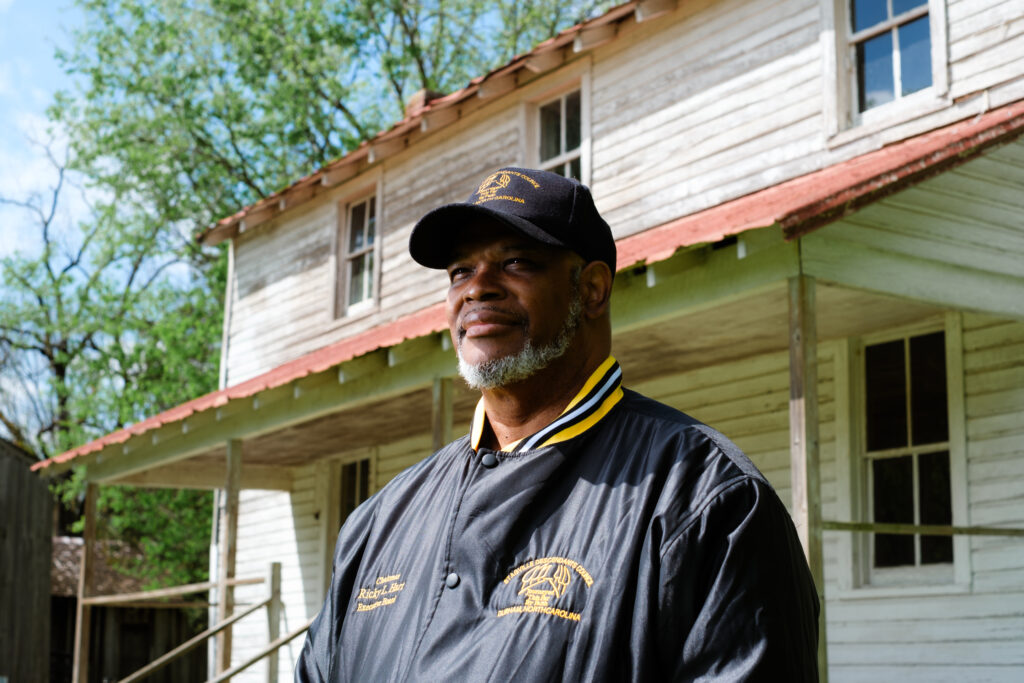
Evans and Ricky Hart are lifetime Durham residents. Their families’ roots run deep from Stagville, which at one point was home to over 900 (North Carolina Historic Sites, n.d.) enslaved men, women, and children. Evans and Hart can’t help but feel connected to the history of the place. They point out fingerprints of enslaved children still visible on bricks at Stagville.
Evans remembers the pride that permeated the city.
“We were just very self-sufficient. And whatever one needed, there was always someone you could go to and get that done. People were thriving. Business was thriving,” Evans said.
Tyra Dixon is the artistic director at the Hayti Heritage Center in the historic St. Joseph’s AME Church building in the heart of the Hayti District. The building is one of the only original Hayti District structures that remain.
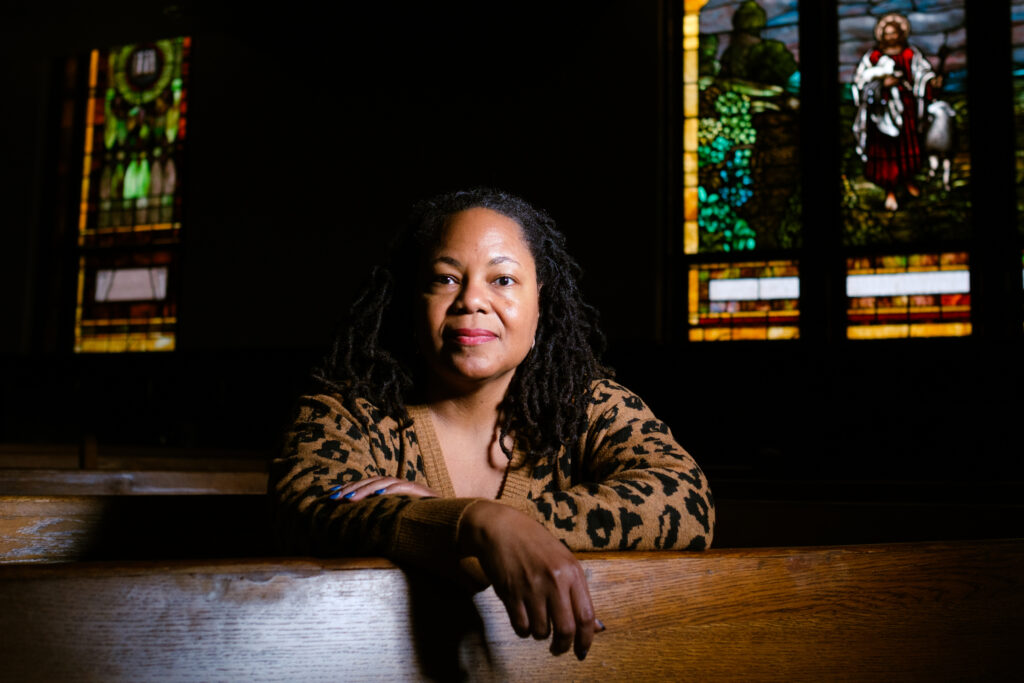
“I’m grateful that it’s still viable and a source of respite and community. I think a lot of people are still connected to it in a religious sense from its original history, but as it developed into a cultural space, I think that’s also been important and been a common denominator for a lot of people who lost what this neighborhood used to be,” Dixon said.
What the Durham Freeway did
In the 1940s and before, one-third of Durham’s population was Black, and it remains around 34 percent Black today, but communities such as Hayti have been fundamentally changed.
“The construction of 147 decimated this entire community, including 500 homes and businesses.”
Tyra Dixon
Artistic Director, Hayti Heritage Center
Throughout the 1950s and 1960s, the federal government funded an urban renewal program that sought to demolish “blighted” or “slum” areas and redevelop them, often making room for highways.
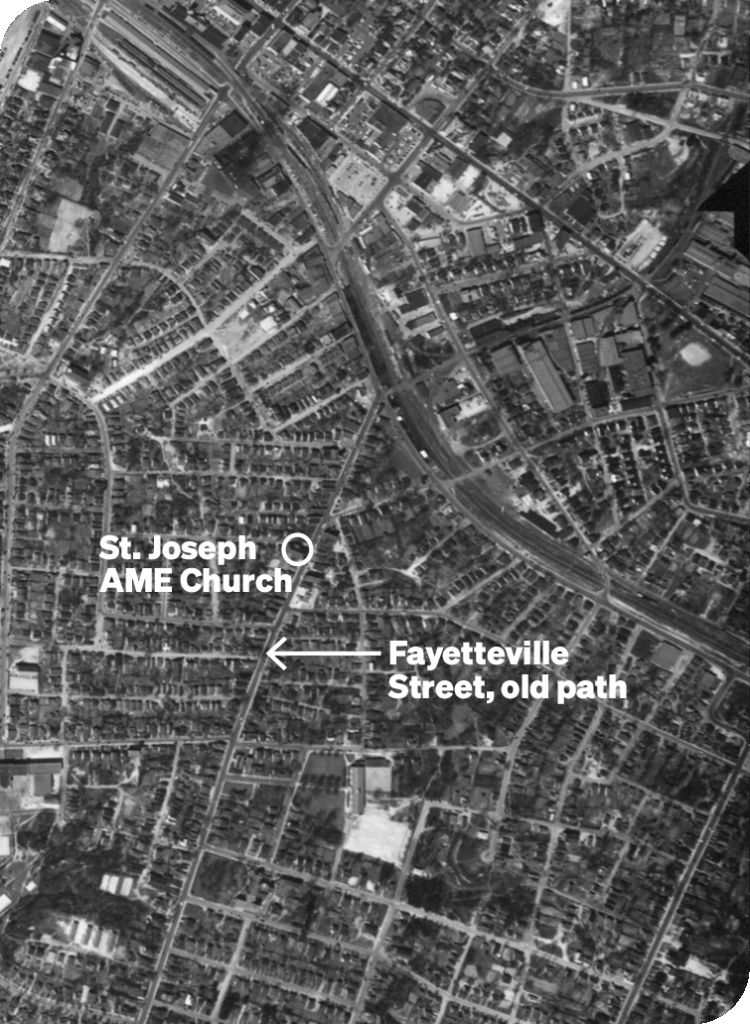
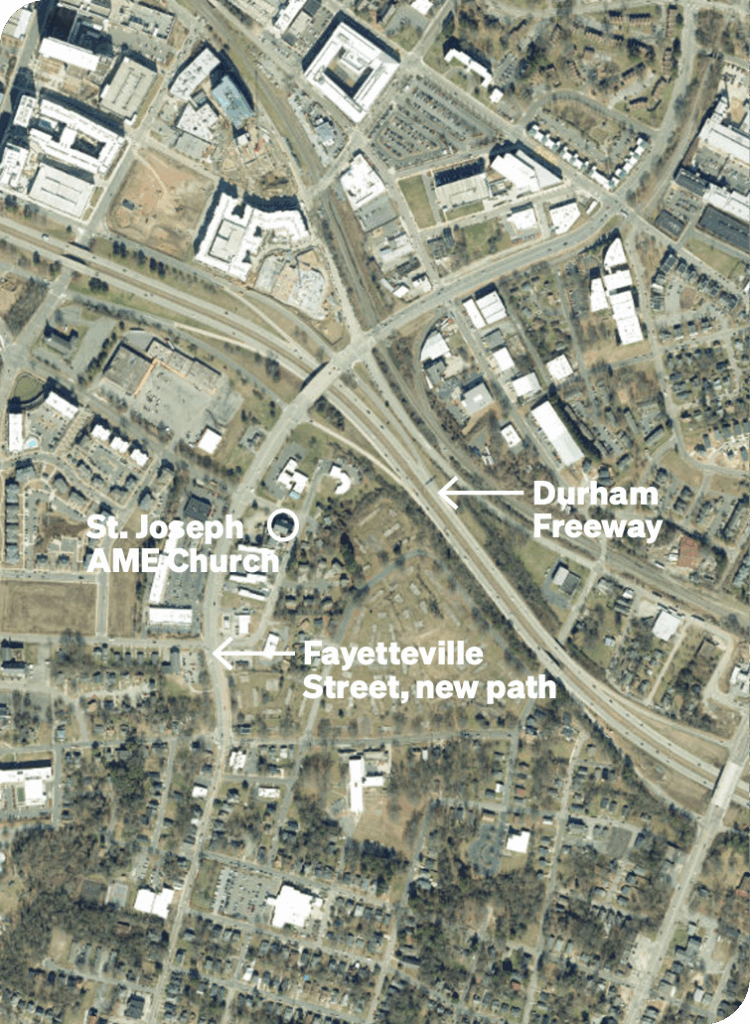
USDA historical aerial photos courtesy of the North Carolina Office of Archives and History, Raleigh, North Carolina.
What the local and federal government viewed as blight could mean anything from structures showing physical decay that were declared unsafe to areas that simply had overgrown vegetation. Other ways that they declared homes and businesses unworthy of further existence were a lack of sewage infrastructure, low property value, and any area that was declared as halting the growth of a municipality. Many of these communities, like Hayti, were indeed thriving and did not fit the description the government carved out for them.
With many of these urban renewal projects came the promise to fund rebuilding efforts and help replace housing that was destroyed. These things never came to fruition for the Black communities that were targeted. Instead, these communities lost land, revenue, and resources, and gained highways that increased air pollution.
Highway NC 147
“The construction of 147 decimated this entire community, including 500 homes and businesses,” Dixon said.
She went on to tell the story of a former Hayti Heritage Center staff member whose family was one of many that was never made whole following their losses to building the highway.
“Ms. Marcia’s family owned a beauty and barber supply business on Pettigrew Street that was demolished, and it was part of that promised reconstruction of the neighborhood once the construction was done, and it never came to fruition. They never repaid those people for losing their businesses or anything. Their business was just bulldozed,” she said.
Ricky Hart expressed a similar sentiment, saying, “When 147 was developed, it went through the economic heart of the Black community. That’s where they thrived, in that area. If you destroy the economic base of a group of people, you will disintegrate their ability to do for themselves.”
The history of highways
Highways have long shaped the trajectory of American communities. Their construction has meant not just the loss of land and animal habitat, but also generations of families facing air pollution, inadequate housing, and limited opportunities. Highways and access to transportation have consistently played an outsized role in determining economic, health, housing, and education outcomes. For most of our nation’s history, these outcomes have been worse for Black communities, regardless of income or educational attainment.
The costs go beyond homes and businesses. Communities lose health, culture, and a sense of place.
Megan Kimball is a senior attorney leading SELC’s transportation work in North Carolina.
“With Highway 147, we see a community cut in half and isolated from the rest of Durham,” said Kimball. “The very neighborhoods targeted by urban renewal are the same ones today with underfunded public transportation, last in line to get electric school buses that don’t pollute, and left out of EV charging investment.”
She went on to note that transportation is the No.1 producer of greenhouse gas emissions throughout not only the South, but the entire nation.
“Living near highways means daily exposure to tailpipe pollution, which causes and exacerbates respiratory illnesses and adds to the cumulative pollution burden these same communities already face,” Kimball said.
Once a highway is built, the damage is lasting. It’s nearly impossible for communities to recover. Aside from health issues, these communities often see more congestion, gentrification, and development without appropriate community input. Residents also face greater climate impacts — like extreme heat and flooding — because highways replace green space with heat-trapping asphalt and concrete, driving up temperatures in places like Durham.
Present problems and future hope
Hart, Evans, and Dixon all agree that Durham is still seeing the impacts of land-use and transportation decisions made long ago as decisions are made today.
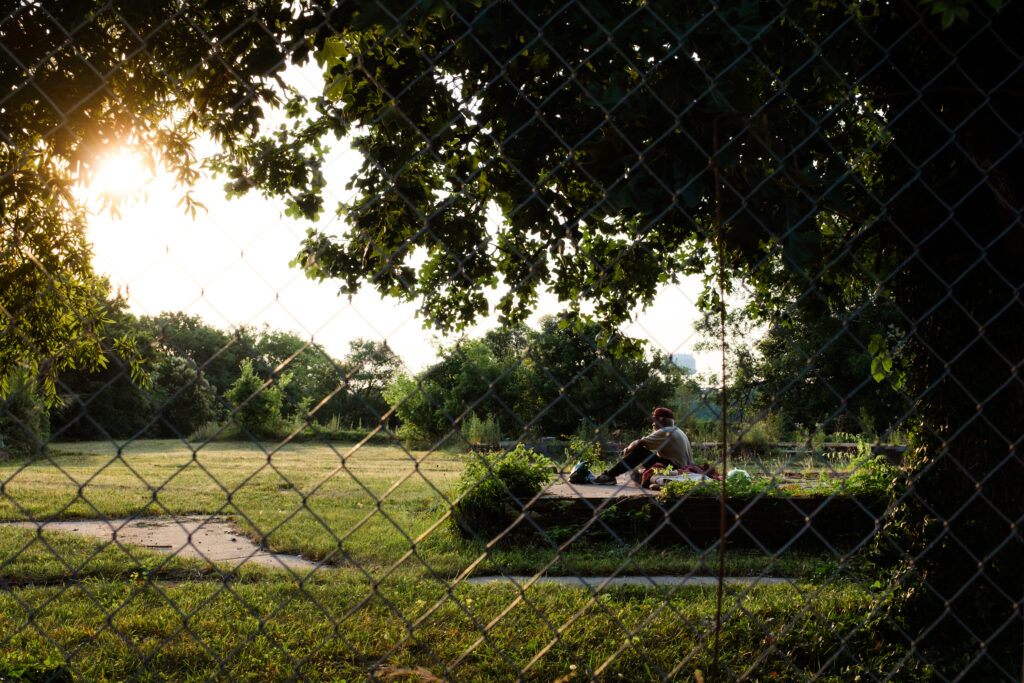
For Hart, this shows up as Hayti and other neighborhoods in and around Durham contemplate new development, grapple with unaffordable housing and rising homelessness, and feel the tension of trying to find a way to maintain the small-town feel of the place they love.
“I think the growth is spreading too quickly. You’re getting more people in, but your infrastructure can’t handle it,” he said, pointing to drainage and flooding issues.
Evans points to the real threat of climate change for these communities and the threat of history repeating itself as communities like hers are left out of decision-making.
“Climate change is occurring, and we’re keeping our heads in the sand and not paying attention to it. They want to shut [that conversation] down, just like they want to tell the lies and shut down parts of history,” she said.
Evans also noted how communities dealing with these issues must be included in the decision-making process and that localities should be “planning for the future, but not [only] with the developers.”
Today, Durham has an opportunity to take a different path. The Reimagine Durham Freeway study is exploring three options for the future of NC 147: converting it into a boulevard, capping it with land bridges to reconnect neighborhoods, or modernizing the existing freeway with a smaller footprint. Each carries tradeoffs in cost, mobility, and impact, but all reflect a desire to repair harm and rethink what connection could mean in the city.
Still, for many residents, distrust runs deep. The destruction of Hayti and other Black neighborhoods is not a distant memory; it is a lived experience passed down through families who lost homes, businesses, and community. For those residents, promises of reconnection are met with both hope and caution.
As the city council prepares to review recommendations this fall, the process ahead will take time. True repair will not come from a single project or planning study, but from consistent, equitable engagement that centers the voices of those most impacted. If Durham gets this right, the story of the freeway could shift — from one of loss and disconnection to one of healing and belonging.
As Durham continues to grow and experience the tensions that come along with it, remnants of Hayti remind those keeping history alive, like Evans, Hart, and Dixon, of what’s at stake. Steps that once led to homes owned by Black families now lead to empty foundations. More than a few older businesses sit vacant as a new generation of entrepreneurs tries their luck in the city that sociologist, historian, and activist W.E.B. DuBois once highlighted as an economic model for other Black communities.
Dixon hopes, for the sake of the entire community, that Black families who have been in the city and part of establishing the community that persists today are able to hold on to land.
“There is still a good portion of neighborhoods where Black families who have been in the area for decades live,” she said. “I’m hoping that those families that established those neighborhoods, that their future generations continue to keep those neighborhoods.”
Continue exploring Hayti on our podcast
Aya Shabu: Highway Through the Heart
Listen to our award-winning podcast Broken Ground for more on how Hayti’s history shows up today.
On her group walking tours around Durham’s Hayti District, performance artist Aya Shabu brings Black history to life, transporting visitors back to Hayti in its heyday. Once known as a Black Wall Street, the community was founded by freed people from Stagville and other nearby plantations. But eventually it was torn apart by urban renewal and construction of Highway 147, leaving residents dealing with displacement, air pollution, extreme heat conditions, and economic loss. Today, as development and gentrification pressures mount, residents like Aya celebrate what came before, while fighting to make sure they have a voice in what comes next.